

Everyone’s attention is still drawn to a single NBA game when someone scores fifty points. It completely restarts the evening rather than only changing the pace. Defenders pause more. Coaches look at each other. In between sentences, broadcasters pause. Something unusual is developing.
Wilt Chamberlain gave it a nearly mechanical feel. He exceeded expectations with 118 games in which he scored 50 points or more. He scored 100 points in a night in Hershey, Pennsylvania, in 1962, which is still basketball’s highest point total. The echoes are powerful, yet the footage is blurry.
Michael Jordan, on the other hand, made his 50-point games purposefully dramatic. He not only dominated the scoreboard but also unnerved opponents with remarkable accuracy. In a playoff defeat to the Celtics at Boston Garden in 1986, Jordan scored 63 points in a performance that today seems prophetic. Larry Bird’s comment, “That was God disguised as Michael Jordan,” lasted longer than the Celtics’ victory.
Kobe Bryant took the performance a step further by fusing an almost surgical mentality with theatrical scoring. His 2006 81-point performance was a show of determination rather than merely a numerical exercise. Kobe overcame Toronto by combining contested mid-range jumpers, step-backs, and transition bursts. He disassembled them one by one.
| Category | Details |
|---|---|
| Most 50-point games | Wilt Chamberlain – 118 times |
| Active leaders | James Harden (25), Damian Lillard (15), Stephen Curry (15) |
| Single-game record | Wilt Chamberlain – 100 points (March 2, 1962) |
| Most in a season | Wilt Chamberlain – 45 games with 50+ points (1961–62 season) |
| Recent high scorers | Shai Gilgeous-Alexander, Nikola Jokić, Anthony Edwards, Tyrese Maxey |
| Notable modern milestone | Joel Embiid scored 70 in 2024, first center to do so in 30 years |
| Evolutionary factors | Pace, spacing, three-point reliance, and strategic rest (load management) |
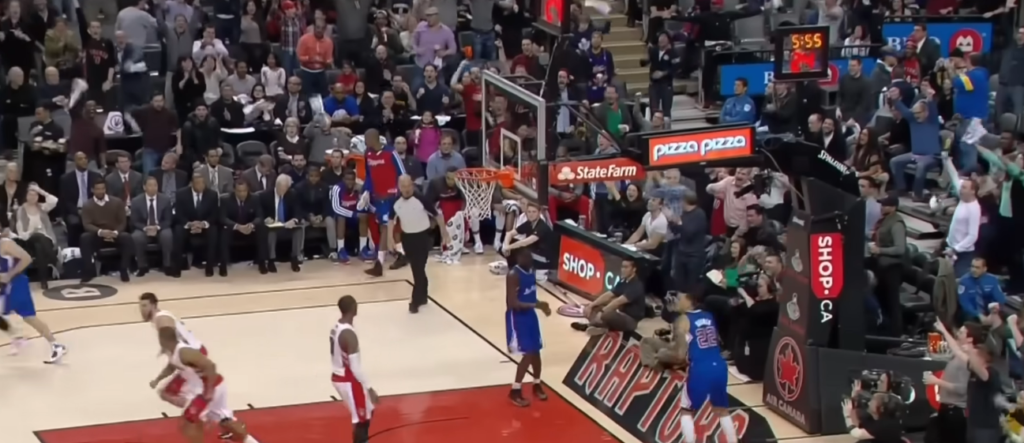
The 50-point threshold has not changed despite tactical changes in the NBA today. Offensive explosions have increased in frequency over the last few seasons, but at no lower cost. Faster speed, wider spacing, and extremely effective shot selection are helping players achieve that level. Volume isn’t the only factor anymore.
For example, Shai Gilgeous-Alexander does more than just score; he glides. This season, he has scored 50 points on several occasions thanks to his ability to probe defenses while remaining composed. In a league where defenders frequently take risks, his footwork—which combines ballet and geometry in equal measure—has proven especially useful.
A 55-point performance by Anthony Edwards against the Spurs felt like a personal statement. He eliminated an additional layer of defensive illusion with each possession. Not only did the performance, which was based on skill and power, light up the scoreboard, it also demonstrated leadership.
As I watched these performances, I noticed that the audience seemed to quiet down in the middle. Instead of astonishment or stillness, there was a pause in which everyone waited to see how far a person could push the moment.
Joel Embiid just joined the elite group with a spectacular 70-point performance. The balance—mid-range accuracy, post-up domination, and an exceptionally delicate shooting touch for a player of his size—was what set it apart. His performance felt very unique in the context of centers’ evolution.
Jokić, on the other hand, favors understated brilliance. It comes in between rebounds and assists when he scores fifty or more. He scores in flow by using delayed reactions, angles, and spacing. Because of his deceptively soft touch, defenders are frequently moved out of position before they even realize they have been baited.
There are also evenings when the anomalies show up. Markkanen, Lauri. Tyrese Maxey. Austin Reaves. players whose careers aren’t determined by how many points they score, but who had a crystal vision of everything one night. Frequently, these games turn into cult favorites—statistical icons with underlying sentiments.
The emotional charge has remained unchanged. It’s rarely a hot night that gets you to fifty. It usually indicates a deeper need, whether it’s establishing control, answering skepticism, or just not settling. It served as a reminder that James Harden’s ability had not lessened despite his role changing when he dropped 55 against Charlotte.
The likelihood of career-long chases like Chamberlain’s has been greatly diminished by load management. Teams place a higher priority on long-term health, players take longer breaks, and ball movement is heavily stressed. 50-point games are still impressive despite this. It increases their deliberateness.
Even in the heat of the playoffs, some games are more memorable than others. Jimmy Butler’s explosive scoring outbursts during Miami’s 2023 run weren’t meant to boost numbers. They were reactions to weariness, trauma, and anticipation. It takes endurance that few people have to score fifty points under duress, with defensive plans falling apart all around you.
The future was hinted at by Devin Booker’s 70-point performance, even if it ended in a loss. He unlocked something greater than a box score at the age of twenty. His subsequent half-smile, half-fatigue look implied that even he was not entirely sure what he had just done.
Outstanding scoring performances are typically remembered for the pivotal moments rather than the totals. An uproarious third quarter. over a double team with a dagger three. The bench shrugged. The combination of these components results in moments that are re-played for their emotional impact more than their technical collapse.
Even if 50-point games are more popular nowadays, they have a contemporary significance. They assess a player’s capacity to control chaos and modify rules without causing systemic problems. These performances are remarkably pure in the face of ever-tighter defensive tactics.
Fifty is not magical. It’s timing coupled with technique. When done right, it transforms the night. Colleagues reassess. Opponents adapt. Fans recall. The number remains significant because it indicates something basic—someone completely solved the challenge this evening in spite of this opposition.
Who will make the next big move is hard to predict. Perhaps Jayson Tatum, with his incredibly fluid physique and handle. Perhaps Jamal Murray, who is still underappreciated for his range and rhythm. The next player to score fifty points is already planning, assessing, and picturing the chasm they are going to blow.
As new players emerge and positions change in the upcoming years, we’ll probably see a variety of high scorers—guys that combine adaptability and efficiency. While they might not pursue records, they will pursue presence. Fifty doesn’t simply indicate that someone scored a lot when it lands.
It lets you know that someone was important that night.
